The world of metal and hard rock seemingly has long been heading for a crisis when it comes to larger headlining acts. As it currently stands, the artists who are able to fill arenas and carry festivals from the heavier genres remain those who were there to benefit from the full power of the music industry machine in its 80s and 90s heyday.
With MTV and the like now faded memories, and the nature of music distribution and reach of traditional press outlets splintered due to an abundance of choice, building or breaking a heavier band these days has seemingly become a job reserved for viral success on TikTok. Just ask Ghost, Sleep Token, Bad Omens and more, who all enjoyed a rapid rise in interest thanks to the platform.
As time rolls on and age catches up to Metallica, AC/DC and Guns N’ Roses, this problem will likely only worsen. Little has seemingly been done in the past decade or so to build up bona fide stars to eventually take the top spot.
Metal and hard rock currently have no shortage of successful artists, mind you. Bands like Slipknot, Five Finger Death Punch, and numerous rock radio-oriented outfits, still have no problem filling a venue. There’s also been an encouraging number of gold and platinum sales certifications awarded to younger heavier artists as well.
But as it currently stands, few, if any, are able to command the same level of attraction and interest the evergreen artists of the 80s and 90s enjoy to this day. The names atop most of the top rock and metal festivals just rotate out the usual suspects on a yearly basis depending on album cycle.
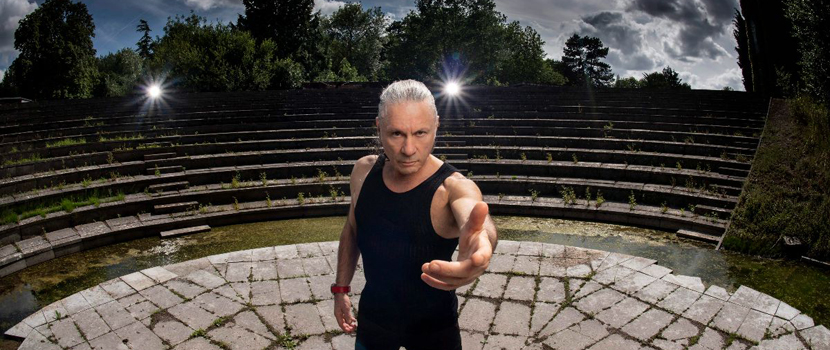
As such, the world of arena rock and metal festival headliners remains a rather exclusive club. Bruce Dickinson, vocalist for British heavy metal stars Iron Maiden, recently shared his thoughts on that. Speaking with Bandit Rock, he elaborated on why he feels there has yet to be a proper transition of power to the next generation, and why it may not even happen.
“I was with a big promoter in when I was in Brazil last week. I was at Comic Con [CCXP23] in São Paulo launching [my upcoming solo album] ‘The Mandrake Project‘…. So when I was there, one of the big Brazilian promoters was there and I was chatting away to him. And he goes, ‘It’s a real problem for us now, big festivals, promoters.’ He said, ‘There aren’t any headliners.’
You can count the headliners on the fingers of one hand, people who are capable of — you put them at the top of the bill and people say, ‘Oh yeah, I’ll go and see that.’ And, unfortunately, the reason for that, I believe, is the big corporations took everything over, and they’re interested in making money, so they propagate the big headliners, but they don’t bring on the bands that create the drama to create the fanbase, to create the dedication to bring it up.
Because you don’t become a headliner overnight. You become a headliner by doing loads of gigs at loads of places and fans and people follow you and all of a sudden you’re at Wembley Arena and you’re thinking, ‘Oh my god, these guys are playing arenas. And the next step up from arenas is, ‘Oh, they’re gonna go and headline a festival. Oh, yeah, great. They’re a festival headliner.’ And at that moment you go take a step up into that world.”
“In the USA, for example, when I was first touring with Maiden, all the arena shows we’d do, and we were like special guests or something else like that. But that’s the point — we were special guests on a three-act bill, building a band in Chicago. And it would be one promoter who did Chicago, and there’d be another one that did New York, and there’d be another one that…
And the promoters in all those places would go, ‘Yeah, we’re gonna bring you back in. We’re gonna do this show with you. And then we’re gonna do this. And we’re gonna build you in Chicago. And we’ll build you up to the point where you’re gonna headline that place. And then when the reaction is, like, really cool, we’ll bring you back and we’ll headline something double the size.’ And every promoter would do that for bands.
And then, unfortunately, fortunately — I mean, we get paid a huge amount of money by Live Nation — but what they don’t do is really bring on bands in the same way. You have to figure out that promoters, those individual promoters, were all taking individual risks. So they’d promote one show and they’d lose their shirt. And then they’d promote another show and go, ‘Oh, we made some money this week. That’s fantastic.’
So you can see the temptation when along comes — I don’t know where the money comes from, a hedge fund or something or whatever, venture capital, I don’t care. But you can see the temptation when somebody comes along and goes, ‘We’d like to buy your thing that you do in New York or Chicago or wherever, and we’re gonna give you a shitload of money. But the deal is, you can’t do anything after that. You’re kind of gonna work for us a little bit or just take a holiday, ’cause we’re gonna run the show from now on.’
And they just kind of hoovered everything up. I mean, they were smart businessmen. But artistically, for the health of the live scene, I think it was troubling. I mean, I may be unfair, but I get the impression that the scene was much more vibrant in terms of upstart bands that could come up and surprise people.
And the other thing as well, which I think has, sadly diminished is the number of small venues where bands can just get up and do a gig. And that diminishes the grass roots of people who go out and go, ‘Oh, my God. I went to a live gig the other day. Whoa, it was cool. It was so much better than sitting in front of a screen.’ … And you’ve just got to have the places to do that.”
[via Blabbermouth.net]