It’s often been said over the past decade or so that heavy metal is headed for a crisis. The pioneers of the genre have hit their 70s, while the stars of the 1980s New Wave Of British Heavy Metal and thrash metal explosion now mostly inhabit their 60s.
Even the cream of the crop of the first wave of nü-metal — arguably metal’s last moment of mainstream dominance this century — aren’t spring chickens anymore, now largely occupying their late 40s and early 50s.
While evergreen artists like Metallica, Judas Priest, Iron Maiden and more remain bankable headliners for festivals and arena, etc. tours, their transition to elder statesmen is already well underway.
As it stands now, the late 90s/early 00s wave of nü-metal bands was probably the last movement to replenish the headliner ranks en masse, giving us the likes of Linkin Park, System Of A Down, Korn, Evanesence, Deftones and more.
There has of course been successes in the two decades or so since, from Avenged Sevenfold, Killswitch Engage & Lamb Of God, to the more recent ascension of Five Finger Death Punch, Bring Me The Horizon and Falling In Reverse.
Even just the last few years have been encouraging, with viral success allowing Turnstile, Bad Omens & Sleep Token to put up impressive numbers. However, unlike the environment many of today’s established headliners enjoyed, mainstream interest in metal has contracted, and thus so too have the profits.
The singular apparatus of the music industry is a shadow of what it used to be, for better or worse. The streaming business model has also made artists resort to essentially existing as traveling merch retailers to break even.
As much as the financial risks weigh on bands, they have also proven challenging for promoters. After all, why take a chance on eating your shirt on a a bill of unproven bands, when you can guarantee a profit with the surefire draw of an expensive headliner.
Unfortunately, that mindset has become more pervasive and the metal genre may yet suffer greatly for it. Promoter Ash Avildsen of Sumerian Records, etc. fame attempted to confront that problem head-on this year, booking numerous up and coming bands for the reactivated ‘Mayhem Festival‘ & ‘Summer Slaughter Tour‘. As he put it this past October:
“I love all the older acts that headline a lot of the rock festivals in the U.S. But I think it’s a bit naïve to think that there’s not an urgent need to break new headlining bands. When I think back to when I was a teenager in the Nineties, the whole new wave of big bands like Korn and Slipknot were young guys.
It’s been a long time since we’ve had a wave of bands with singers that are in their twenties that can really headline festivals. I feel like we’re finally there with a number of bands, [and] I think Mayhem can really help elevate this era the same way that it had elevated bands 10-15 years ago.”
While admirable, his booking gambles didn’t entirely pay off, as the Veil Of Maya-headlined ‘Summer Slaughter Tour‘ suffered from middling attendance at a number of shows, while the Bad Omens & Parkway Drive headlined ‘Mayhem Festival‘ also turned out to be a bit softer than he likely had hoped.
There were of course external factors that contributed to the fate of those endeavors, including stiff competition and an unfavorable economy. In fact, the problem of low attendance wasn’t even confined to the metal world, as multi-platinum artists and established festivals were also forced to scrap their plans this year, and next year seemingly isn’t immune.
Avildsen isn’t the only one concerned about the state of future metal headliners, as Iron Maiden vocalist Bruce Dickinson has also spoken at length on the matter, stating last year of the problem metal bands face in breaking out, “the big corporations took everything over, and they’re interested in making money, so they propagate the big headliners, but they don’t bring on the bands that create the drama to create the fanbase, to create the dedication to bring it up.”
While Avildsen‘s attempts to elevate new talent to top billing were all-in gestures, the UK are opting for a more conservative approach. Rising British alternative metal outfit Sleep Token have been named as a headliner for the closing date of next year’s ‘Download Festival‘. However, the festival is also relying on some old favorites in Green Day and Korn to headline the other two dates of the fest.
Sleep Token being given that headlining spot hasn’t been without controversy, despite the band clearly being able to headline large arenas in the UK and Europe. Andy Copping, founder of the ‘Download Festival‘, however feels confident in the band being able to rise up to the occasion, jumping to their defense after some concertgoers decried their booking.
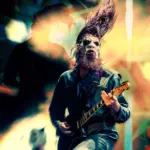
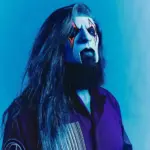
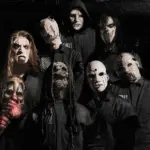
In a recent discussion with NME, Slipknot percussionist M. Shawn “Clown” Crahan was asked how he felt about Sleep Token being given the nod to headline next year’s ‘Download Festival‘, a festival which Slipknot themselves have headlined numerous times over the years. Crahan replied:
“They have their niche and they must be doing their business well. The old me might have torn it down, but the new me, the real me, is just like ‘Hey, it’s always up to the fans’. The fans let the business people know what to do. The fans speak and the business people listen.
They must be very popular, and you’ve got to remember that there’s not a lot of good music out there. There just isn’t. In my opinion, these days there are so many horrible bands right now. I’ve seen Sleep Token, I’ve watched them for a bit and I’ve downloaded their stuff. They have their niche and they have a fan base.
It doesn’t matter if it has divided [Download fans] because that means 50 per cent are getting what they want. I no longer worry about these sorts of things, I just worry about being me and about being in the moment. If they’re a good band, and if they work hard – as it seems like they do – they deserve everything they get.”
When asked if he felt that promoters should be taking risks to break new headliners, Crahan doubled down on his assertion that the problem isn’t only just financially related, but also due in part to an apparent lack of musical talent. He elaborated on that as follows:
“As I was saying, there are so many horrible bands who are going to be our future headliners. You don’t want me to start naming off names, because we’ll both start laughing and laughing. The days of great music have come and gone at the moment. We’re seeing the backlash of the computer and we’re seeing the backlash of everybody being able to get in [to the music industry]. But where is everybody that got in and did it themselves? They all need validation.
I didn’t get in a band to get validated. I validated myself. When someone said I needed to work harder, I worked fucking harder. I didn’t need the internet, or socials, or anything to validate me. We have a real problem now, and bands that are good these days – which is few and far – are being prepped for this future. We saw that with Bring Me The Horizon. They’re a great band and I’m a fan. I’ve listened to the band since the very, very beginning and they’re doing big things like headlining Download because they can make that jump.
Great bands are being pushed into these new circumstances. What else do we have [without artists like that] – a bunch of crap bands that won’t draw tickets. So yes, the business people need to take chances and push these few good bands in the right direction.”