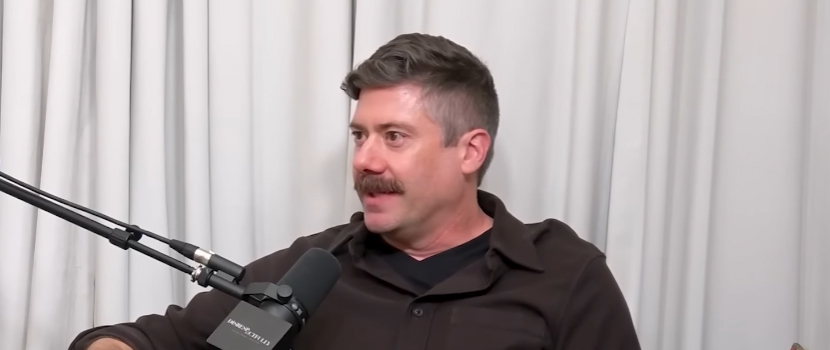
Limp Bizkit‘s influential guitarist Wes Borland sat in on the newly released episode of the ‘Disrespectfully Podcast‘, discussing his ups and downs in the aforementioned multi-platinum nü-metal band, his creative passions, his love life, and more. During the chat, he also touched on some interesting developments that took place in Limp Bizkit as the band were first getting off the ground back in the mid 90s.
Borland would famously split with the band back in 2001 as tensions with other members, burnout and trauma from the death of a fan at an Australian show the band played began taking a toll.
While he would rejoin the outfit several years later, it turns out that wasn’t the first time he had exited the outfit. As he detailed on the podcast, he actually quit the group just as they had first gotten signed and were working on what became their 2x multi-platinum certified 1997 debut album “Three Dollar Bill, Yall$“.
However, a series of unfortunate incidents befell his former bandmates, ultimately leading him back to the group. Borland elaborated on that after being asked on the podcast about when he felt the ban began experiencing success. Here’s what he had to say [transcribed by theprp.com]:
“It wasn’t very long, It happened pretty quickly. We did a couple of regional tours. We actually… Fred [Durst, Limp Bizkit singer] and I have had a interesting history of trying to get along with each other, up until, like, the last seven years, and now we’re awesome. But It took us really growing up, because of egos and just like different ideas of what the band should be.
Right before we got signed, I was like, ‘No, I don’t want to do this.’ And I went back to working at a coffee shop. And they got different guitar players and sort of reformed the band. They got signed. I’m out. My brother [Scott Borland] was originally in Limp Bizkit too, on keyboards, and he was like, ‘If you’re not doing I’m not doing it.’ But, [we were] young and stupid, and just like, you know, knuckleheaded people not being adults.
They got signed, bought a van & trailer, drove out to LA to start making their record without me, without my brother, at DJ Lethal‘s house, who was in House Of Pain at the time, he was going to produce. And the guy driving, one of their friends — I kind of knew him a little bit too — but in the middle of Texas, [he] flipped the van, went off the road, flipped the van.
Everybody, everybody… like Fred‘s feet went through a window, destroyed. Everybody was cut to ribbons. The guitar player flew out of the window. They showed up in LA… they were in the hospital, [the showed up] in LA on crutches to start recording. And the people in LA that were doing the record were like, ‘What is happening?’
Then the guitar players, in the middle of the night, stole all the gear — all the guitar gear — and rented a car and drove back to Florida. Then it was just like, they started calling me and going, like, ‘Do you want to do this again?’ And I was like ‘No. I don’t want, I don’t want any part of it,’ you know, being stubborn.
I think finally they went to New York, and were trying to record in New York with some people, and I finally just went, ‘Yeah, I’ll come up to New York and we’ll try’. And that’s when we started writing the first record. It’s been wild, like wild. When I think [back], I don’t think about like the old days, but how many terrible, weird things happened to get us where we were.”
Later in the chat, Borland also spoke of how the success of their cover of George Michael‘s “Faith” saved their debut album, even though it was initially released as a last-ditch effort. While the songs “Counterfeit” and “Sour” were launched as the first two singles from “Three Dollar Bill, Yall$“, it was the October 1998 release of the band’s rowdy take on George Michael‘s 1987 hit “Faith” that paved the way for their ascent to mainstream domination. Borland said of that at the time:
“So we had like two singles that came out that didn’t do well, that didn’t really hit. And then ‘Faith‘ came out, and we made a terrible video for ‘Faith‘. And then Fred was like, ‘We’re trashing this. We’re gonna do like a Mötley Crüe-style tour video that shows us, like our footage on tour.’
And he brought a film crew out, and the video was just us on tour. I think, the combination of doing the cover of ‘Faith‘ and people seeing actually what the shows were like, that’s when it really hit, and that’s the first time… We were recording our second record at the time when ‘Faith‘ came out. That was just like, the last ditch to see if we could get any traction.”