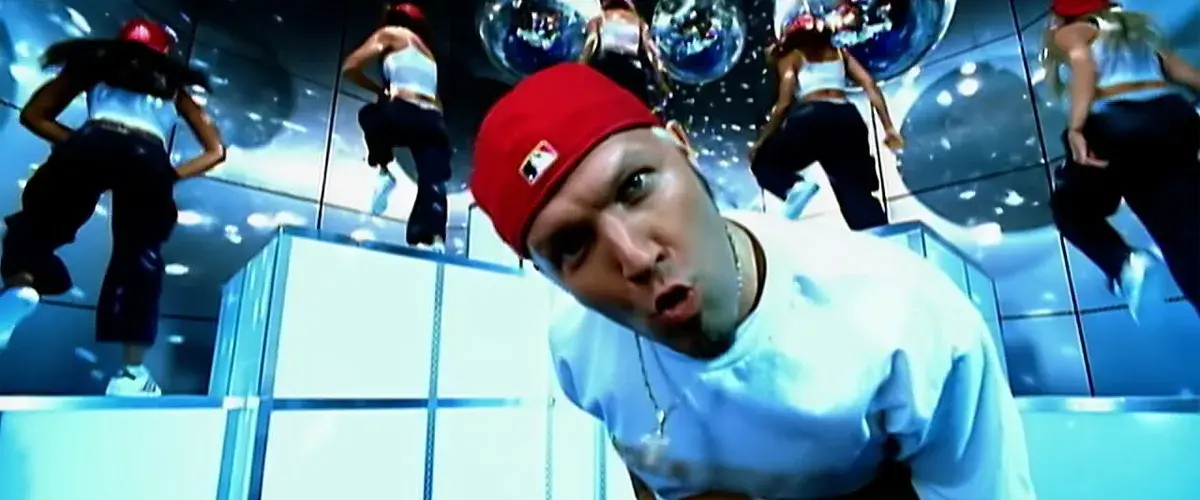
A newly digitally published retrospective on Limp Bizkit‘s 6x platinum-certified 2000 album “Chocolate Starfish And The Hot Dog Flavored Water” over at Metal Hammer finds the band looking back at an era that would ultimately serve as the height of their commercial peak.
Coming in hot off of the 7x platinum “Significant Other“, Limp Bizkit were largely inescapable at the time — or at least their frontman Fred Durst was. From television appearances, to video game cameos, soundtrack spots, WWE events, hanging with pop stars and more, Durst in particular had risen to the status of being a pop culture icon. He had also struck it out as a label executive around the same time, helping Puddle Of Mudd, Staind and more land deals.
However, with the nü-metal sound Limp Bizkit had helped popularize beginning to lose steam amid a glut of soundalike artists and public interests shifting away from metal’s big moment in the charts, “Chocolate Starfish And The Hot Dog Flavored Water” also unwittingly led to the band’s proverbial undoing for a number of years.
Public opinion against the group had begun to shift around the band’s raucous set at the 1999 ‘Woodstock‘ festival. In 2001, a teenage girl died after being injured in the mosh pit during Limp Bizkit‘s set at the 2001 ‘Big Day Out‘ festival, further poisoning the band’s public perception.
2000 infamously saw Rage Against The Machine bassist Tim Commerford stage a protest against Limp Bizkit at the ‘MTV VMA Awards‘. Commerford‘s negative opinion of Bizkit remained in place at least some 15 years later. As the early 2000s kicked off, rifts also began to emerge between Limp Bizkit and their peers, including tensions with Deftones, Incubus and even Creed.
As fame and an apparent lack of fortune followed, so too did internal tensions. Guitarist Wes Borland would exit the band in 2001, remaining on the outs until rejoining the fold in 2004. By the time of his return however, the wheels had already begun to fall off.
A lackluster 2003 follow-up album, “Results May Vary“, did little to stem the band’s decline and an inspiring 2005 EP, “The Unquestionable Truth (Part 1)” was practically a nail in the coffin, with drummer John Otto largely absent from the sessions.
Borland reflected on the band’s rapid rise with Metal Hammer years later, stating in this aforementioned piece:
“I never thought Limp Bizkit was gonna be as large as it was. Then the record sold a million in the first week. It was just ridiculous. There was a point in which things got so big that I don’t remember them getting bigger.”
Despite the juggernaut success of their 1999 sophomore album “Significant Other“, Bizkit set out to strike again while the iron was hot, heading back into the studio to craft “Chocolate Starfish And The Hot Dog Flavored Water” after only roughly a half a year of promoting “Significant Other“. Borland recalled of that time:
“We had this huge record to follow up. There was pressure, but we didn’t feel insecure or like we couldn’t follow it. We felt really confident going in, and I knew what I wanted to do. I knew it was gonna be different from ‘Significant Other‘ – and better.”
Looking back at the time of growing backlash that followed “Chocolate Starfish And The Hot Dog Flavored Water” however, Borland told Metal Hammer:
“We weren’t accepted by rock any more, we weren’t accepted by pop. [But] we were accepted by the hip hop world because the hip hop world got the hip hop side of us, but had never really experienced rock like that before. Without tooting our own horn, we’re the band that does that best: that tries to represent both sides equally, rather than being a rock band that has some rap, or a hip hop band that has some heavy guitar. I think we’re pretty evenly split down the middle.”
While Limp Bizkit‘s excess and egos behind the scenes played a toll on the band, so too did it impact their finances. Borland recalled how the stage production on that tour cycle found the band barely breaking even.
“Everything just seemed excessive. I think the last tour we did on that record cycle, we had our own stage built, there was this giant robot… [the label] told us, ‘If you have this production, none of you are gonna make a penny on this tour.’ And we went, ‘That’s fine!’ We did all this touring that didn’t make any money because our production was so huge. It was like we just broke even. It was ridiculous.”
By the end of the “Chocolate Starfish And The Hot Dog Flavored Water” cycle the music climate had shifted. The New Wave Of American Heavy Metal movement was blossoming, as was the metalcore scene. Nü-metal’s bloat had caught up to it and Limp Bizkit were relegated to largely touring Europe mostly for a number of years. That negative sentiment remained largely in place around the group up until their career renaissance in the 2020s, where they’ve since found themselves warmly welcomed back.
Borland elaborated on why he feels it took so long for people to once again embrace the band, telling Metal Hammer:
“I just think it took a lot of people time to get over how annoyingly in everyone’s face we were for that period. When you’re that overexposed, where no one can get away from you and you’re like, ‘Uh, I’m so sick of seeing this person all the time.’ Now, people can enjoy the band for what it is. I love being in Limp Bizkit so much now. I love every show, I love going on tour, I love everybody in the band. But it took all these years for me to look back on that and go, ‘God, I love this, and I love playing those songs.’”