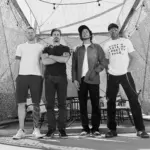
Rage Against The Machine vocalist Zack de la Rocha was recently spotted at Glen E Friedman‘s ‘Burning Flags‘ photography exhibition in Barcelona, Spain. The aforementioned Rock & Roll Hall Of Famers were among the various artists snapped by Friedman over the years and were on display as part of that exhibition.
With de la Rocha largely eschewing the spotlight over the years, Binaural managed to get in a few question with the noted rap metal architect and prominent political activist along with Friedman.
A brief interview conducted with both de la Rocha and Friedman saw the topic of Turnstile‘s recent activism raised. That melodic hardcore band drew some 60,000 fans to the Washington Monument last weekend while raising over $280,000 for humanitarian aid in Gaza, Sudan and Lebanon. That landmark moment for the modern hardcore scene paralleled Fugazi‘s own past activism at that venue.
De La Rocha went on to state that he hopes interest in bands like Turnstile serves as a bridge to those that pioneered the genre as well:
“It’s interesting to see this style resurfacing. I don’t know if it will have the same impact, but again, there are a lot of kids discovering it for the first time. And they do so through their first experience with bands like Turnstile. Then they start discovering Minor Threat, Bad Brains, Negative Approach, The Clash… So these bands occupy a really interesting place, like a kind of bridge. I hope that through them, people will turn their attention back to the original groups.
Glen is one of those figures who helped give visibility to bands that had never achieved that level of reach. He made it his personal mission to give them visibility and create that whole culture of resistance, that universe of materials and cultural expressions that ended up becoming a global phenomenon.
Personally, I don’t think a band like Turnstile could exist without something like Bad Brains. And I also don’t think Bad Brains would have achieved the visibility they have without Glen‘s persistence and perseverance in promoting them. Many people would never have discovered that band if it hadn’t been for him. He’ll tell you the stories himself; he has quite a few.
Over the years I’ve talked about this, and it’s always amazed at how much Glen‘s small, persistent actions helped bring bands like Bad Brains to the public eye. He made it possible for people to discover them, see them, hear them, and be inspired by them.
Well, I think music can become an interesting way to project the social antagonisms that exist beneath the surface.”
Friedman responded:
“An artist has to do what they want to do. And I think everyone should raise their voice to try to make the world a better place. There are too many problems. Too much is happening. You can’t just stand by and do nothing. And hopefully, these bands are playing… I mean, first and foremost they’re musicians, but they’re also activists. They pick up their instruments to carry out that activism and make themselves heard. So it’s complicated…”
That prompted to de la Rocha to offer:
“When you look at the encampments here in Barcelona; when you see what’s happening in other places; when you look at what just happened in the streets of Paris; and when you see what’s starting to take shape in the United States, where a genuine anti-imperialist culture is emerging from within the belly of the beast…
Music has the power to become a kind of antenna, a vehicle that projects that antagonism, that fury. An understandable, dignified, and legitimate fury. And when you see new generations of bands observing what’s happening and wanting to incorporate all of that into their work, that’s where a truly revolutionary culture is born. For our generation, it was Bad Brains, Public Enemy, MC5, and other artists who were giving voice to what was happening in the world.
Yes, all of that is here, in this music, which conveys those messages so skillfully and powerfully. That’s why all of us, and Rage Against The Machine in particular, feel indebted to what’s happening right next door (points to where the exhibition is taking place).”