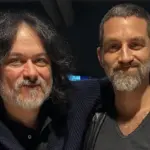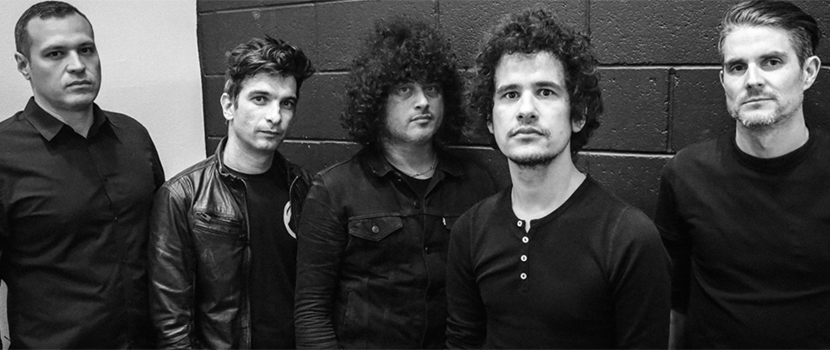
As part of a interview exploring their revealing new documentary film ‘Omar And Cedric: If This Ever Gets Weird‘, longtime friends and musical collaborators, Cedric Bixler-Zavala and Omar Rodríguez-López, opened up about the struggles and triumphs they faced with their acclaimed bands At The Drive In & The Mars Volta.
While both of those outfits were well-received on their own merits, the scenes they rose to prominence in — particularly during the ascent of At The Drive In — didn’t align with their own internal values and fluid approach to sexuality.
At The Drive In found themselves being shoehorned into the aggressive nü-metal scene via festival billing and the like. That association was somewhat invited by the band, after they chose to work with producer Ross Robinson on their 2000 breakout album, “Relationship Of Command“.
Robinson himself is regarded as the ‘godfather of nü-metal’ for his work on key albums from Korn, Slipknot and more. His involvement on “Relationship Of Command” did bring in eyes and ears from the nü-metal fanbase.
Newly speaking to The Guardian of their unhappiness at the time, Rodriguez-Lopez stated:
“Coming up in the punk scene, there’s this promise of hope and joy, but we found the world we were in to be very sexist and homophobic. Back at that time, Rolling Stone was promoting Limp Bizkit and Korn, two overtly misogynist bands.”
At the time, Bixler-Zavala would take to chiding the audience for the influx of excessive moshing and violence on display in their live audiences. One key moment in the band’s career that crystallized that growing unease was their 2001 set at the ‘Big Day Out‘ festival in Sydney, Australia.
Taking issue with the level of aggression being displayed by the audience that day, the band attempted to walk off the stage in protest, facing threats of being sued by the festival promoters. Later that night during a headlining set from Limp Bizkit, a 16-year-old female fan died after being crushed in the mosh pit at the festival.
Speaking to The Guardian of the increase of violence their audiences displayed during the early 2000s and Bixler-Zavala‘s subsequent barbs towards them, Rodriguez-Lopez stated: “That happened all the time. I found myself in a space with the kind of dumb jocks I tried my whole life to avoid.”
In a moment of bittersweet vindication, upon the duo returning to play the ‘Big Day Out‘ festival several years later, the climate of safety at the festival had drastically changed, with promoters holding individual safety meetings with each performing artist.
In a separate live interview conducted with Zavala several years ago by Rolling Stone, he addressed his “idealistic” mindset at the time of that fest, stating how he was upset with the amount of ‘bros’ who took in their set. He also made mention of the audience being perhaps overly adrenalized by sets from the likes of Mudvayne and more. He further relayed that his stances on exerting control on the behavior of the audience have softened over the years.
Zavala‘s take at the time wasn’t entirely unfounded though. The catastrophic ‘Woodstock ’99‘, which paired numerous aggressive artists in a poorly managed festival environment, served as stark example of what could go wrong: riots, sexual assaults and deaths.
However, while the rowdiness of the nü-metal scene of the late 90s and early 2000s served as an easy scapegoat, much of the blame could also be placed at the feet of the promoters themselves. The general lack of safety precautions was the norm at the time. Pairing that laxness with little access to proper amenities and overall gouging for daily necessities were undoubtedly accelerant if the heavier music on stage was the spark.