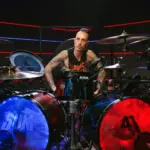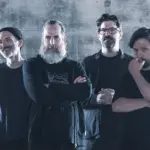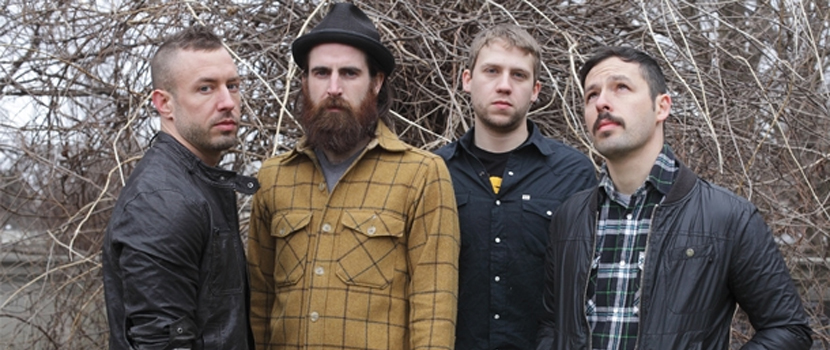
The Dillinger Escape Plan frontman Greg Puciato has shared a chronologically ordered list of what he feels are the band’s fifteen most important tracks. Along with each of his choices he offers some personal insight. Take in a few excerpts below with the full read up now at Teamrock.com. Given that the band have been in the studio recording a new album as of late, this list will likely require an update by the end of the year.
On “43% Burnt“:
“I bought this the day it came out at Reptilian Records in Baltimore. The open and close of 43% Burnt was an instant hook. Apparently, it was a last-minute add-on. It’s still a really defining part of our set every time. In between the prior EP and this, the original bass player Adam Doll was paralysed from the arms down in a car accident, then Liam [Wilson] joined. It would be the first of many setbacks, tragedies, injuries, and member changes. The riff is a sound of perseverance.”
On “When Good Dogs Do Bad Things“:
“A lot happened in between Calculating Infinity and this EP. Dillinger had caught the ear of Mike Patton, and toured opening for Mr. Bungle. They parted ways with their singer Dimitri [Minakakis] in 2001 and I joined shortly after. I used to drive or take a bus or train to Liam [Wilson, bass] in Philadelphia, and then he would drive to Brian [Benoit, then guitarist] in New Jersey, and then Brian would finish the drive to the practice spot near Chris [Pennie, drummer] and Ben.
So, in the late summer of 2001, we were at Liam’s place in Philly and he was playing the instrumental of this song. He was like, ‘We didn’t know we were gonna find a singer so fast, so we kinda have Mike Patton doing this, if you can believe that. Are you cool with that?’ Obviously because of who it was, I couldn’t be mad. A lot of people asked back then if it felt intimidating to have to come after that, but I felt fortunate that my first release would be a direct comparison with one of the best.
I knew it would make me give my best, to be on the highest proving ground. This EP did a lot for us as far as introducing us to wider audiences and having people look at us more seriously. At my first show, in September 2001, we opened with this instrumentally before going into The Running Board. We played it for months before Mike ever recorded his real vocals.”
On “Sunshine The Werewolf“:
“This song became the next 43% Burnt for us, and again, it contained a part that was a really late add-on which would become synonymous with our band. There was originally singing over the entire middle part of that song where it slows down. I ended up using the original melody almost note-for-note in the chorus of Nothing’s Funny on One Of Us Is The Killer. But anyhow, I didn’t think it was powerful enough and we needed some sort of statement there.
The gap in between the clean and the distorted… the song was done and there was nothing there. That part was blank. The ‘destroyer’ part was a last-minute idea that felt in theory almost ridiculous. I mean it’s absurd to really think about. Just screaming that part in the gap right before it crashes in. On paper, it’s almost silly. When we heard it, it sounded massive.
Again, there’s something just so unifying and defiant and resilient about it. It’s become such a high point at every show, like a rallying point for the band and our fans. That and the end of the song, it gives me goosebumps to think about. We would play this live before we recorded it, and this was way before YouTube, so people would bootleg the audio from shows and post it on message boards.
I knew the song was going to be a big one for us when we played a show in New Jersey, because these two kids – Scott and Mike – knew the lyrics to the end of the song and it wasn’t even out yet.”
On “Unretrofied“:
“It’s not a song we’ve played many times live, but Unretrofied was important for us – it was really melodic to the extreme. If we hadn’t done that song I don’t think we would have been able to have the confidence to do Black Bubblegum and stuff like that years later. It was a big stepping stone for us as far as confidence without aggression goes.”
On “Lurch“:
“This was the song we were using to audition drummers when Chris Pennie left, because it was the most difficult song on the record to play drum-wise. We sent [the song] to all these drummers and they sent back these really hack versions of it. I won’t name any names, but there were some drummers who are really high profile who sent us back versions of Lurch that weren’t even fucking close.
And we really started to believe that we were never going to be able to be a band without Chris Pennie because he was such a phenom. We thought he was an alien, and then I got a phone call from Gil Sharone. It was two in the morning my time, because I lived on the East Coast at that point and I was like ‘Who is this California number calling me?’ and I answered it and it was Gil. He said, ‘I got your number from Chris Hornbrook [Poison The Well at the time, currently Big Black Delta] and I can play this Lurch song – I heard it this morning’.
And I just said, ‘Well, let me know when you think you can send something in’ and he said ‘I’m just going to put you on speakerphone, sit down at the drums and play it. Right now.’ He put the phone down and just fucking blazed through it. He just murdered it. So I was like ‘Hey, man, can you hang on a second?’ and I put him on hold and called Ben on three-way and got Gil to play it again – and that was it.
We went to California to record Ire Works and we’d all never even met Gil. Ben had met him in NYC prior or something – but for literally one night. We got to California and we went to the studio and he showed up late, but with undeniable confidence and charm. We were crossing our fingers that Lurch wasn’t a fluke and he could actually finish writing the record with us because we’d only heard him play that song through a fucking speakerphone.
And that was a pivotal thing because it was such a huge moment of relief that there was going to be life after Chris Pennie. It might seem like a long time ago now, but back then it was this immense hurdle to overcome. Obviously now we’ve had Billy for a few records – longer than any drummer we’ve had – and if Chris was like the regulator Terminator, then Billy’s the liquid Terminator, the newer model. But back then, we didn’t think anybody like that existed.”
On “One Of Us Is The Killer“:
“To me, this whole record is a highlight. If I could fucking put 11 Dillinger songs on a Greatest Hits, it might just be that album, because I feel like we took everything that we started doing on Miss Machine and refined it to a point that I’m totally happy with. If One Of Us Is The Killer was the only record that people ever heard by us, I’d be completely happy about that – it’s the time capsule record of our band.
Prancer, I feel, is one of the most vicious songs we’ve ever done. When I Lost My Bet is one of the best-written ‘crazy’ songs we’ve ever done. One of Us Is The Killer is the pinnacle of the melodic aspect of what we do. My vocals are the best on that record by far of any Dillinger record, which was something I really, really aimed high for; to me, it’s a band achievement and personal one.
It was a huge turning point in my development as a person, as an artist, everything. I wanted us to write the record that was going to beat Miss Machine, that was going to take what we did on the record to the furthest we could take it, and I truly, truly feel like we did. I feel super happy about it. But that leaves us with having to do something that changes direction or isn’t in that vein or a refinement of process.
Without giving anything away, I don’t think that we’re going to do One Of Us Is The Killer Part Two on our next album. I Still Know That One Of Us Was The Killer Last Summer, at least.”
Head over to Teamrock.com for the rest of his choices.